
What a holiday home in Dubai really earns for a Spanish owner or investor
· 7 min
The 15% you were told isn't what you end up paying. How Airbnb and Booking fees work in Spain, where the 21% VAT that both apply is hidden and what to look for in your own payout statement.
Leticia Heres · · 6 min read
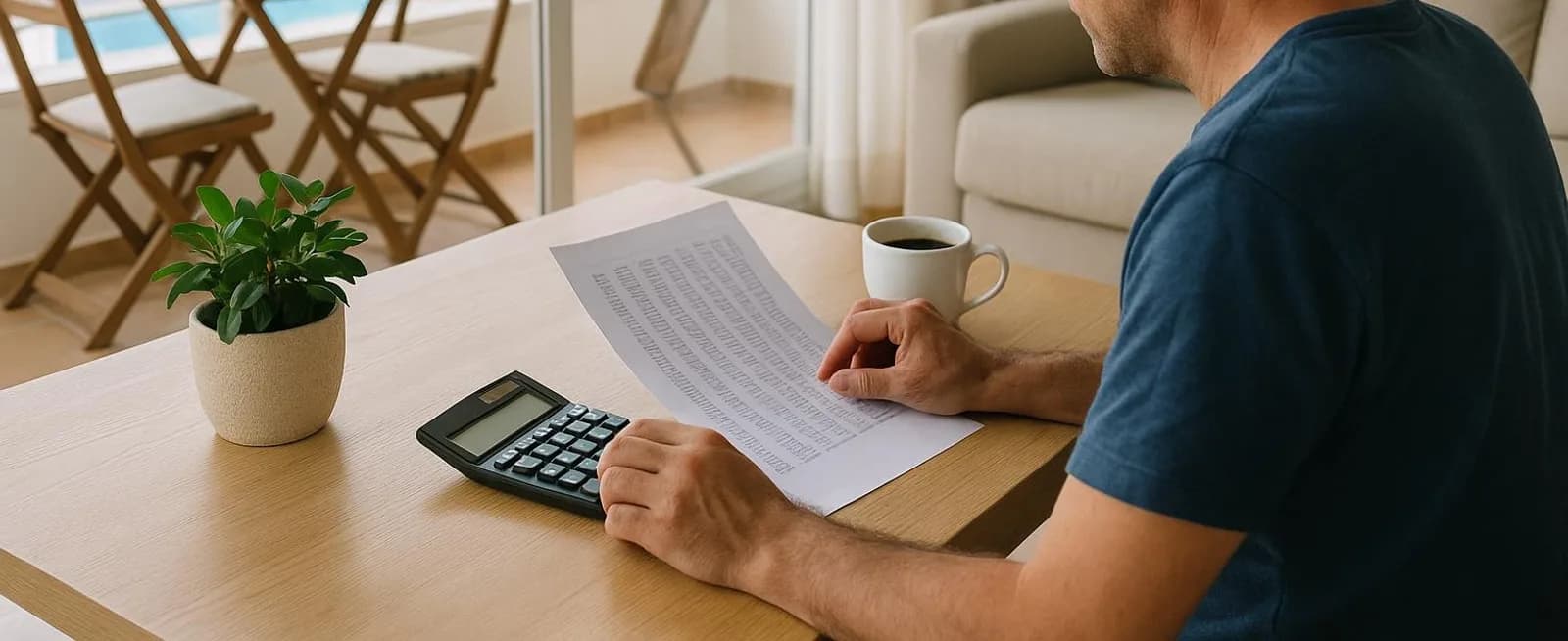
"Why does Booking take more off me than Airbnb, if both told me 15%?" It's the first question almost every owner asks when they see their real payout statement, not the one in the brochure. And they have reason to be surprised: the percentage you're told when you sign up and the one that comes out of your pocket are different numbers.
That difference matters. Over a year, across dozens of bookings, it's money that decides whether the rental earns you something or just gives you work.
Here are Airbnb's and Booking's fees side by side, with the figures both platforms publish, and the part almost nobody tells you.
For years, Airbnb split its fee between the two sides. You paid around 3% of the booking, and the guest was charged a separate service fee of between 14% and 16% of the subtotal.
That's the model that made people think Airbnb "barely charges the owner". It did charge, but the bulk was paid by whoever booked. That pushed up the final price, which is why your listing looked more expensive than what you were charging.
That model is being phased out. Airbnb is moving all hosts to the single fee, and it's already compulsory for most, including those who manage with a channel manager or property management software. With it, you pay 15.5% of the booking and the guest sees the price you set, with no fee added on top. Once you're on it, there's no going back.
And there's a detail almost nobody mentions: if you use Airbnb from Spain and don't have an NIF-IVA (EU VAT number), that fee carries 21% VAT. That 15.5% becomes a real cost of close to 18.8% of the booking. You'll find it on Airbnb's official service fees page and on its VAT page.
With Booking it's the opposite of Airbnb: the number looks simple and hides a layer.
Booking's commission is around 15%, with a caveat: Booking doesn't publish a single figure per country. The real percentage is in your accommodation contract and depends on the area and the type of property. Its own help pages describe it as a percentage that varies, not a fixed 15%.
And if you sign up for visibility programmes such as Preferred, you move up in the search results in exchange for adding commission points.
The hidden layer is VAT. Since 1 June 2024, Booking applies 21% VAT on its commission to partners in Spain who don't have a valid intra-Community NIF-IVA.
If you're a private owner without that registration, you don't pay 15% commission. You pay 15% plus 21% of that 15%. So the 15% commission becomes an effective cost of around 18% of the booking. Booking charges it and pays it to Hacienda (the Spanish tax agency) on your behalf; it explains this on its page about VAT on commission invoices in Spain.
There are exceptions:
That 21% is the part that doesn't appear in the brochure. But it isn't exclusive to Booking: Airbnb also applies 21% VAT to its fee. What explains the question at the start is something else: with Airbnb's split fee, the bulk of the fee was paid by the guest, so on your statement Airbnb seemed to charge much less. With the single fee, that difference disappears.
Take a €1,000 booking to see the full picture. These are round market figures, just to make the mechanism clear.
If you're a private owner without an NIF-IVA:
If you have an intra-Community NIF-IVA, both invoice without VAT (reverse charge: you declare it yourself):
With VAT included on both, the difference between platforms is a few euros per booking. What really moves your net is your tax situation (with or without an NIF-IVA) and the real percentage in your contract with each one. Multiplied by a year's bookings and by several homes, that stops being small change.
Across the more than 100 homes we manage in Spain and the Emirates, that platform-by-platform adjustment is one of the levers that moves the net most without touching the price or the occupancy.
None of this means Airbnb always wins. It means the percentage you're told is no use for comparing. What compares is how much reaches you for the same booking, with VAT already included and your tax situation in front of you.
The platform fee is the most visible deduction, but not the only one. This is where many calculations fall short:
In our homes, Airbnb has 2,277 reviews and Booking 1,469.
No channel is good or bad on its own. The mix depends on your area, your type of guest and the effective fee of each one, and that's looked at home by home.
Don't trust the headline percentage. Take a real payout statement and check these five things. They're what separates an honest calculation from a brochure one:
If you get an effective fee above 20% and don't know where each point comes from, there's something to review.
If you'd rather we did that calculation with your home's numbers, request a free valuation or write to us and we'll look at it. Part of a management company's job is making sure you don't lose margin in the platforms' small print.
For most hosts, 15.5% of the booking with the single fee, which is now compulsory for almost everyone; the guest sees no added fee. If you don't have an NIF-IVA, 21% VAT is added to that fee, and the real cost ends up close to 18.8%. The split fee, where you paid around 3% and the guest the rest, is being phased out.
In Spain it does, since 1 June 2024, if you don't have a valid intra-Community NIF-IVA: Booking adds 21% VAT on its commission. With that registration, the invoice comes without VAT and you declare it yourself. It doesn't apply in the Canary Islands, Ceuta or Melilla.
With VAT included on both, the difference is a few euros per booking: for a private owner without an NIF-IVA, Airbnb's 15.5% ends up close to 18.8% and Booking's 15% close to 18%. The channel that suits you best depends on your occupancy per platform, your area and your tax situation. What you need to compare is the net per booking, not the headline percentage.
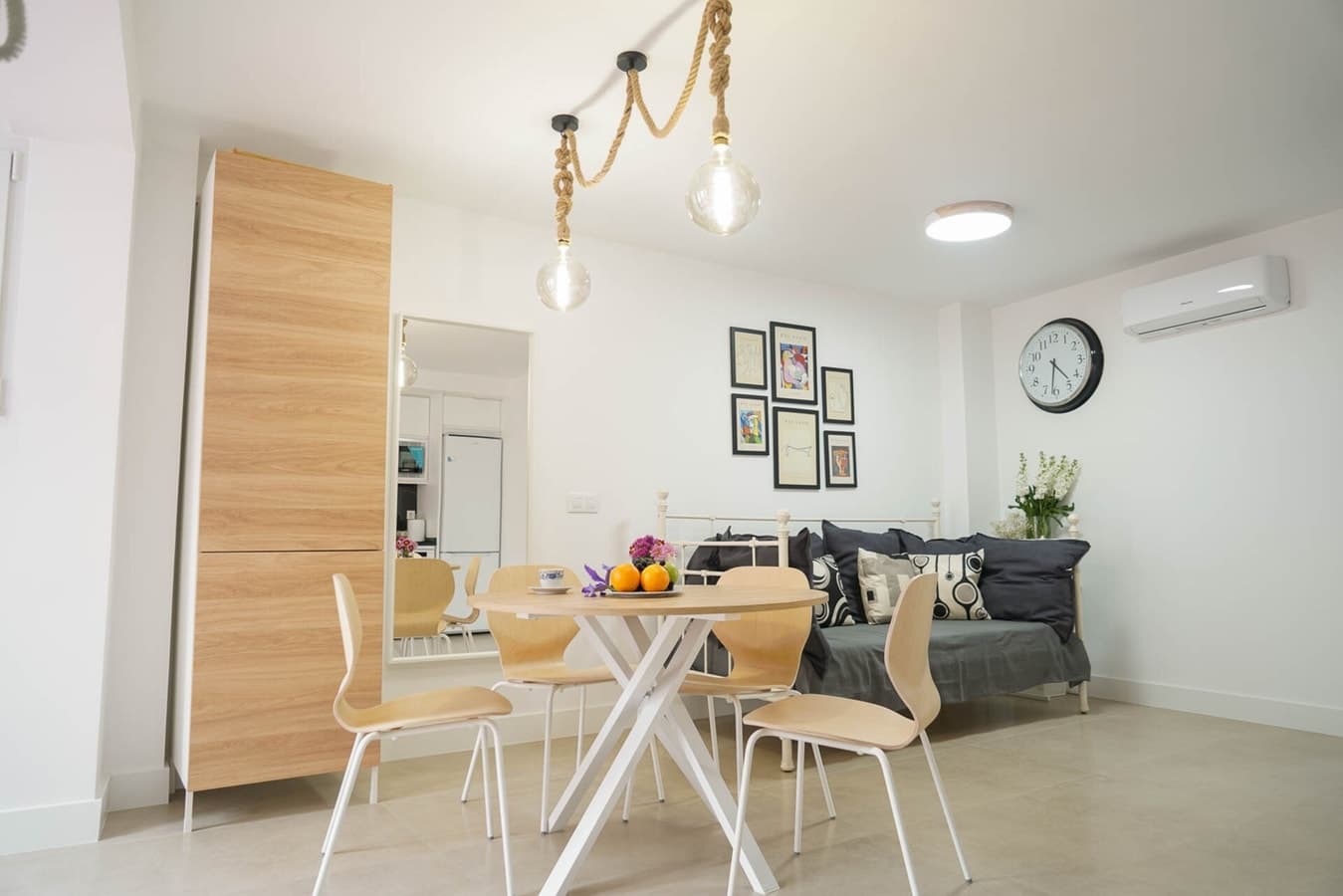
We tell you what your property could earn, what needs work first and what we take off your hands. Free, with no commitment.